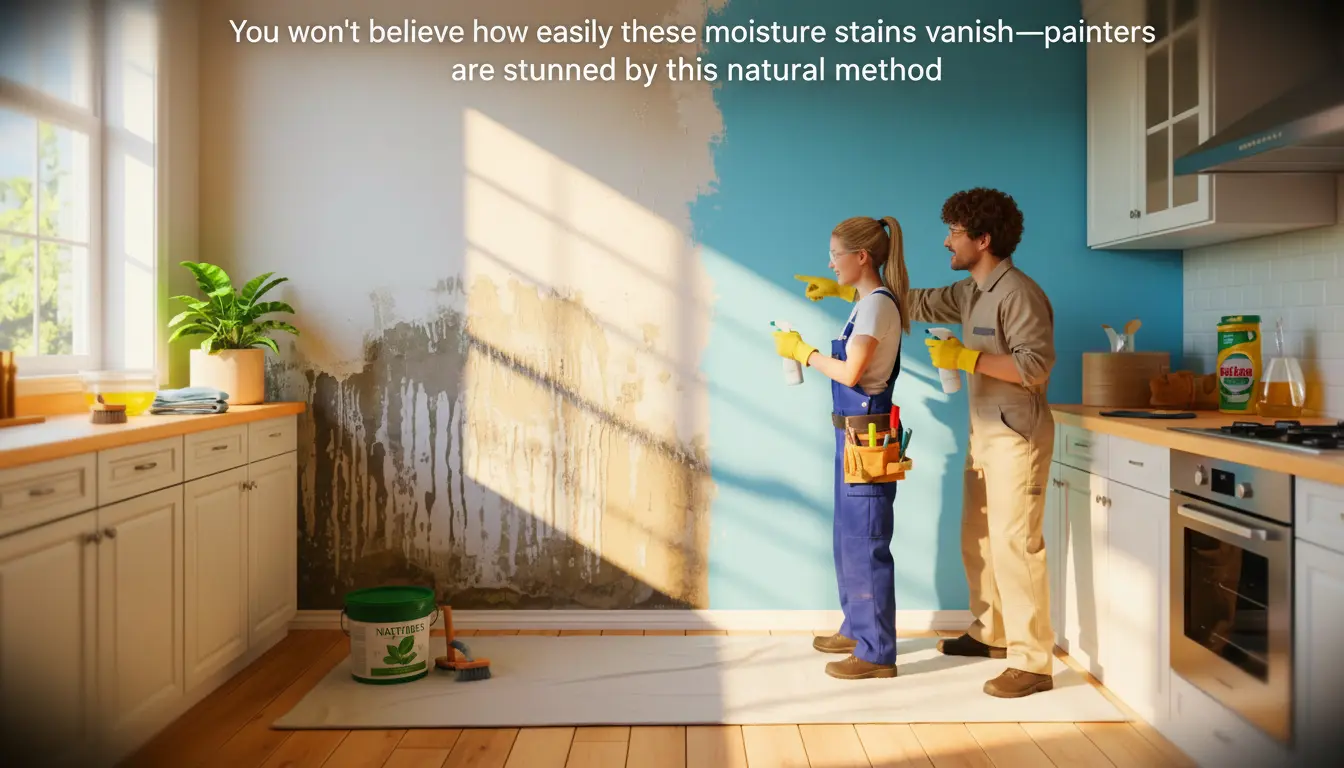
Picture this: years of fighting unsightly moisture stains on your kitchen wall, and suddenly, with a simple, eco-friendly trick, they begin to melt away—no harsh chemicals, no costly renovations, and your paint still glistening as though nothing ever happened! Sound too good to be true? Homeowners and renovation pros are buzzing about a game-changing natural method that’s making even seasoned painters rethink everything they thought they knew about wall care.
Moisture Stains: More Than Just an Eyesore
Let’s face it, moisture stains have been the bane of countless households. They don’t just mess up your décor; they can also pose real health threats due to lurking mold. Traditionally, when those shadowy patches appeared, the remedies often involved toxic paint jobs or full-blown renovations—none of which are particularly appealing or wallet-friendly.
Now, however, a fresh, innovative solution is making waves, and not for the usual reasons involving paint fumes and steep bills. This method relies entirely on natural, easy-to-find products, promising to tackle both the stains and their underlying issues in a way that’s gentler for your home and everyone living in it.
The Secret Sauce: Nature’s Dynamic Duo
No, there’s no magic involved, nor do you need to summon a home-renovation fairy. The secret is a mix dominated by two household classics: white vinegar and baking soda. Renowned for their cleaning muscle and antifungal powers, these two create a fizzy reaction that goes after mold and moisture, lifting them off the wall while leaving your paint and wall structure untouched. Yes, your walls can finally keep their cool (and color) under pressure!
- White vinegar: Known for its powerful cleaning and antifungal effects.
- Baking soda: Acts as both a gentle abrasive and a neutralizer for lingering odors or mold.
Unlike traditional treatments, which can douse your living space with harsh chemicals, this method uses nothing toxic or environmentally aggressive. Healthier for you, safer for the planet—and you still get dazzlingly clean walls.
How Does It Work in Real Life? Just Ask Martine (and the Pros!)
Don’t just take our word: Martine, a Lyon resident and moisture-mark veteran, was among the first to try this technique after years of battling stains in her kitchen. “It was incredible,” she says. “After applying the treatment, the stains began to vanish, leaving the wall untouched and the paint shiny, as if nothing had ever happened.” Talk about a happy ending!
But it’s not only everyday folks singing its praises. Even painters with decades of experience are frankly gobsmacked. Bruno, who’s been in the painting game for 20 years, summed up his amazement: “I never thought a method so simple and natural could be so effective. This could really change how we handle moisture issues.” Such honesty from a pro? You know it’s a big deal.
The Bigger Picture: A Shift Toward Sustainability
If this technique catches on, it could dramatically curb demand for heavy-duty, expensive painting services. The market may begin tilting towards more sustainable, wallet-friendly options. Beyond the immediate savings, there’s a bigger ripple: it could drive a shift in the renovation industry itself, fostering less invasive and more environmentally sensitive practices. As these methods gain traction, they could also push innovation in building materials and restoration techniques, setting a new standard for tomorrow’s homes.
- Lower health risks compared to harsh chemicals
- Potentially huge cost savings for homeowners
- An environmentally gentler renovation approach
- Stimulus for further construction innovation
All things considered, this discovery might just mark the start of a new era in wall care and structural preservation. The combined benefits for cost, health, and environmental impact could make this the favored method for keeping humidity at bay in the years ahead.
If you’re part of the group that dreads yet another repaint or the thought of chemical clouds in the living room, perhaps it’s time to embrace your inner chemist and try out a bit of vinegar and baking soda magic. Your walls—and your wallet—may thank you.

John is a curious mind who loves to write about diverse topics. Passionate about sharing his thoughts and perspectives, he enjoys sparking conversations and encouraging discovery. For him, every subject is an invitation to discuss and learn.