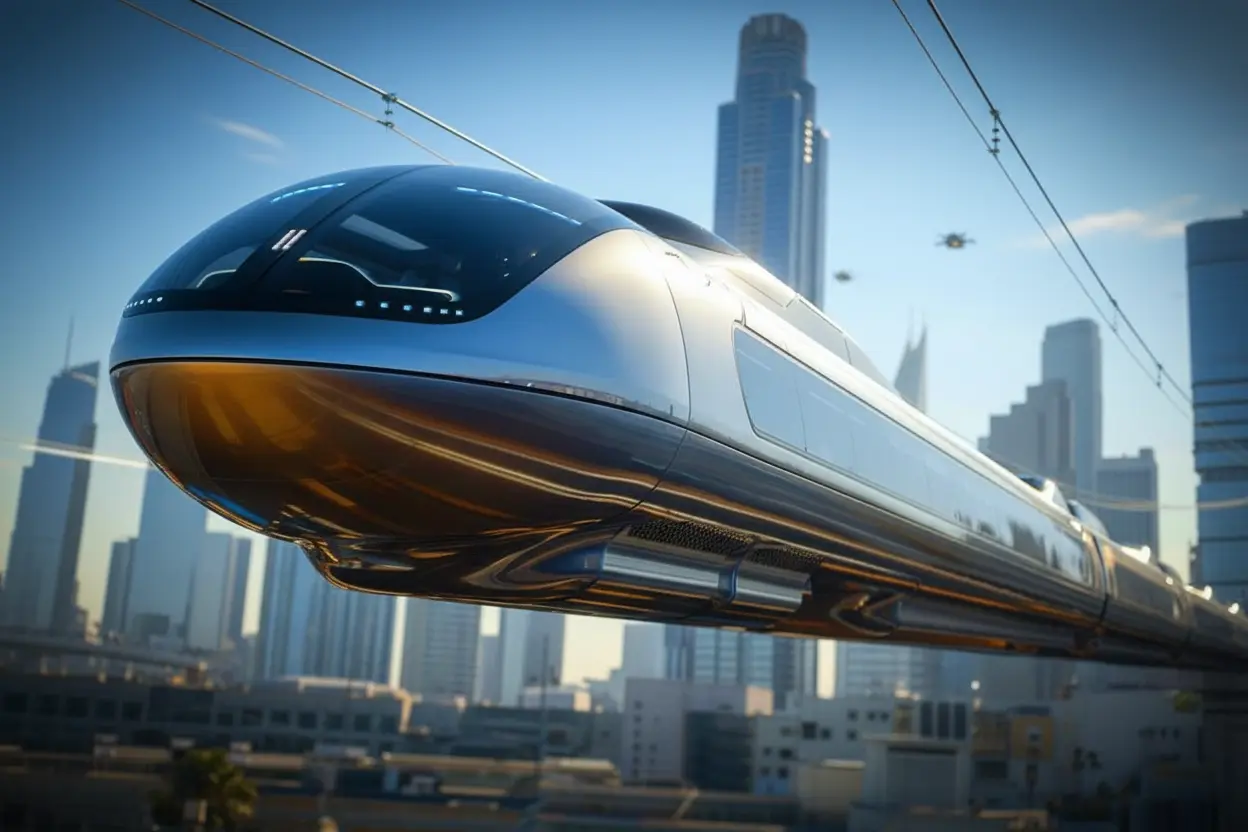
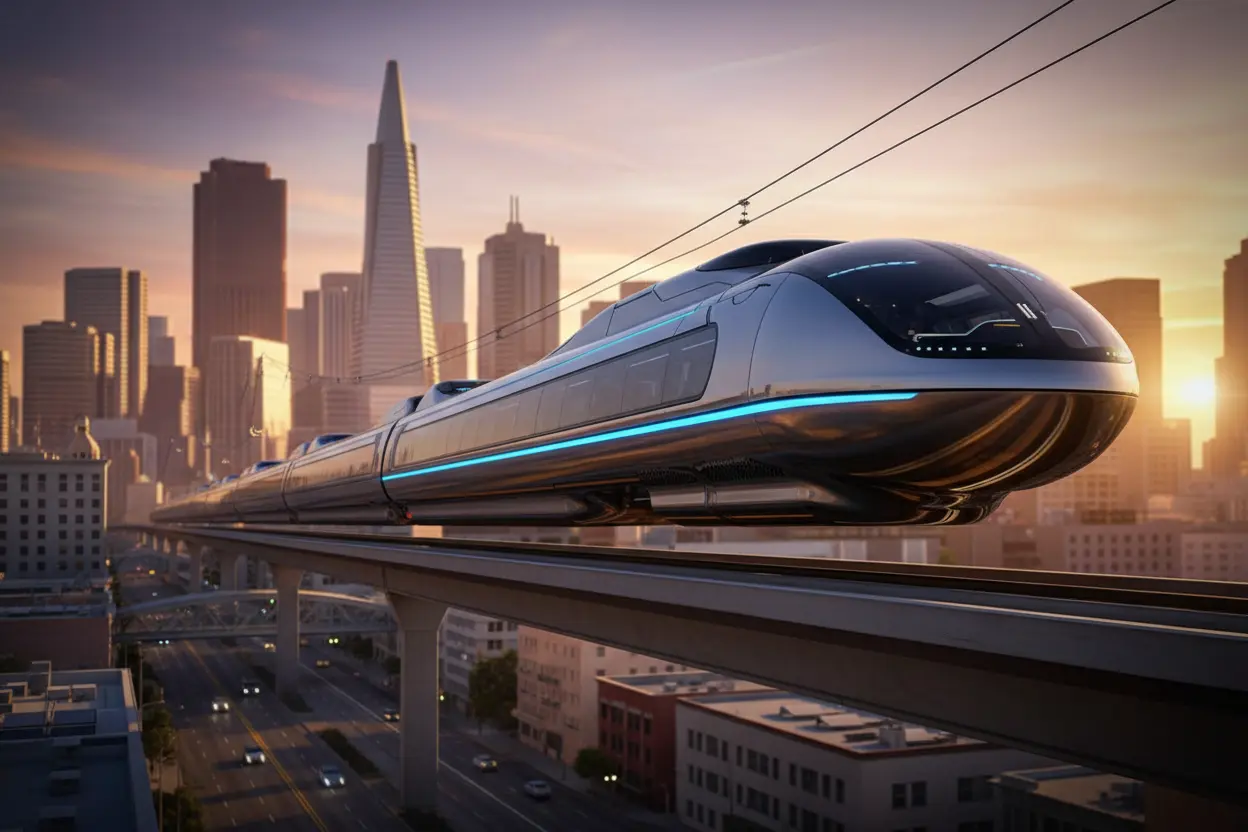
Picture yourself in a bustling Chinese train station. Trains already whizz past at 350 km/h, but now, imagine a vehicle that actually “flies” over the rails, gliding in a partially vacuumed tube and targeting the mind-boggling speeds of an airplane. It might sound like science fiction, but this is exactly what engineers in Datong, Shanxi province experienced during the first full-scale test of China’s supersonic Hyperloop. Buckle up—there’s a new contender in the race for the future of travel, and it’s looking to give airplanes a run for their money.
Testing the Limits: A Maglev Marvel
On a two-kilometre track in Shanxi, China unveiled a new prototype: a maglev Hyperloop that managed to integrate advanced magnetic suspension and smart control systems, all within a low-pressure tube environment—yes, a tunnel with much less air than what you’re used to breathing on your morning commute. This prototype doesn’t just roll down the track, it “flies” above it, thanks to the wonders of magnetic levitation and vacuum dynamics.
And just how fast is fast? While the precise top speed remains under wraps (those engineers do love their secrets), experts suggest that the vehicle was nudging the 1,000 km/h mark. That’s firmly in the territory usually reserved for commercial jets, pushing magnetic-levitation tech to heights (and speeds) never before achieved by traditional maglev trains.
- 2-kilometre test track in Shanxi province
- Integrated maglev suspension and control systems
- Low-pressure tube environment for reduced air resistance
- Specialists report peaks close to 1,000 km/h
The Partnership and the Vision
This technical leap comes courtesy of a fast-paced partnership between the Shanxi provincial government and the China Aerospace Science and Industry Corporation (CASIC). Building this test infrastructure in record time underscores the strategic urgency of the project. Let’s not mince words—the ambition is huge. Picture traveling from Beijing to Shanghai in only 90 minutes. For context: that route currently takes about eight hours by conventional train or five hours by plane, if you’re lucky with airport lines and flight delays.
Such time savings could transform daily life for millions, not to mention the pulse of business and economic exchange. The dream of slashing down travel times for countless travelers is now on the table—and there’s no need to pack an airplane neck pillow.
Daunting Challenges: The Price of Supersonic Ambition
Now, before you start booking your futuristic train tickets, a dose of realism: There are quite a few hurdles on this breakneck journey.
- The Hyperloop needs long, sealed tubes and dedicated stations—far more complex than your average subway extension.
- Building these structures could send costs sky-high (we’re talking potential sums in the tens of billions).
- Connecting this new system to existing railway networks isn’t exactly plug-and-play.
And let’s not forget the environmental and safety concerns:
- Long vacuum tunnels raise big questions about environmental impact.
- Regular maintenance and passenger safety in emergencies are non-negotiable.
- The financial plan, with an estimated cost of 15 billion euros, still needs to satisfy both public and private investors hoping for a solid return.
Those heady dreams of continental train journeys as fast as—or faster than—air travel are closer than ever before. But turning this vision into a daily reality means navigating some very bumpy (and expensive) tracks.
The Final Frontier: Can Dream Meet Reality?
The prospect of a train capable of challenging planes on intercity routes is no longer just a fantasy. China’s recent demonstrations in Shanxi have propelled the nation into a new era, where velocity and efficiency promise to blend in ways never before seen in public transport.
Yet, the question remains: can China overcome the technical and economic challenges standing between today’s tests and tomorrow’s bustling Hyperloop lines? The vision is within reach, but is the leap truly possible? For now, the world is watching as velocity, ambition, and a dash of good old engineering grit try to launch travel into a completely new dimension.
Lesson of the day: Hang onto your hats. The future of travel might be arriving even faster than you think!

John is a curious mind who loves to write about diverse topics. Passionate about sharing his thoughts and perspectives, he enjoys sparking conversations and encouraging discovery. For him, every subject is an invitation to discuss and learn.