Imagine revolutionizing the electric vehicle industry at an age when most of us were struggling to choose between calculus homework and video games. At just 17, Robert Sansone has reimagined the electric motor—without rare earth materials—and thrown the world’s automotive future a curious, eco-friendly curveball.
Young Mind, Groundbreaking Vision
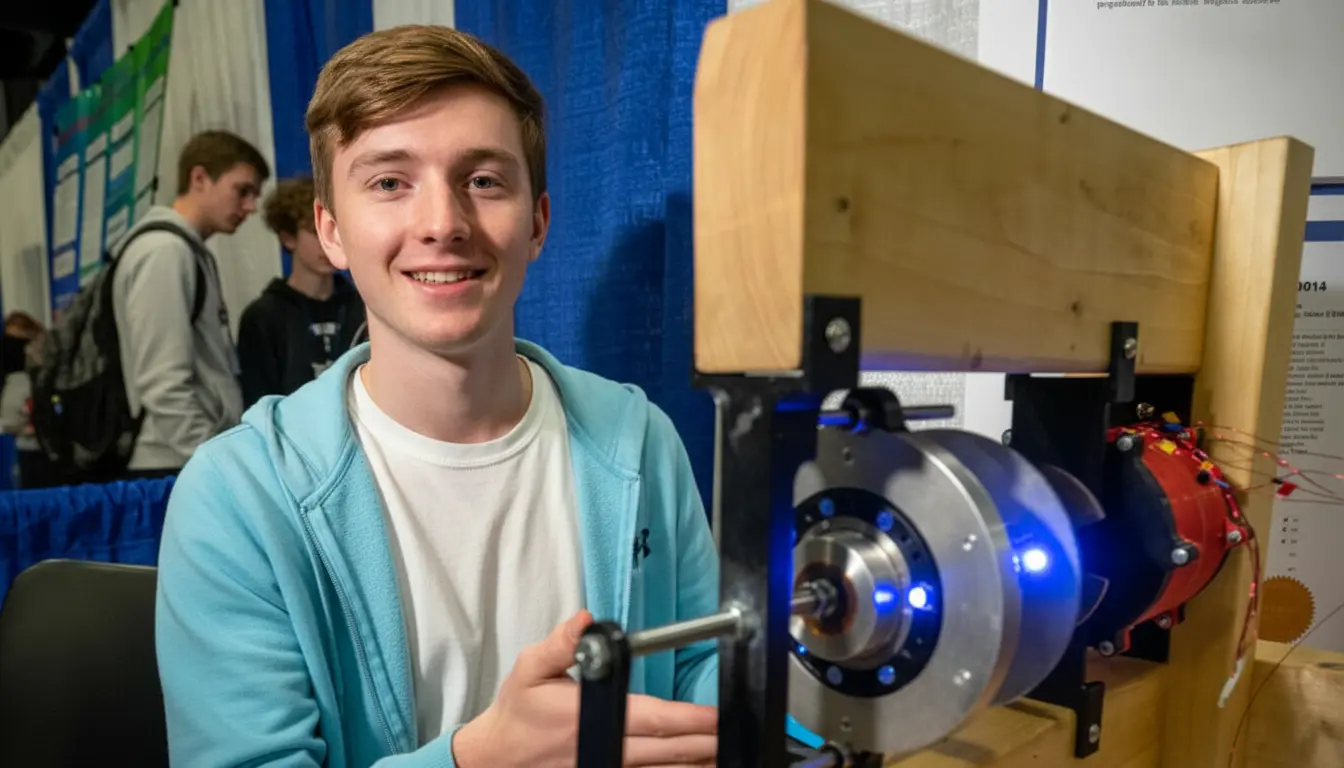
When most teenagers are busy fine-tuning their latest playlist or frantically texting about math tests, Robert Sansone was busy winning the first prize at the 2022 Regeneron International Science and Engineering Fair, the crown jewel of global student competitions in science and technology. His creation? A prototype electric motor that not only caught the attention of serious industry minds but came with a very real $75,000 check, a concrete testament to just how much interest his work generated.
Sansone’s invention centers around a synchronous reluctance motor that boldly drops permanent magnets from its build. While this motor technology has already existed for tasks like pumping and ventilation, it had never before staked its claim as a contender for electric vehicles. That, one could say, is where our young mastermind cranked things up a gear.
How a Magnet-Free Motor Makes the Difference
- The heart of Sansone’s project: a synchronous reluctance motor prototype.
- Key feature: No permanent magnets, which are typically made from rare and expensive materials.
- Where are such motors currently found? Mostly pumps and ventilation systems—until now!
- Never before had this technology been proposed for electric vehicles.
The real twist comes with performance. Sansone’s prototype, by eschewing permanent magnets, achieves a remarkable 39% increase in torque compared to conventional models. Goodbye, rare earth magnets. Hello, more power and less environmental guilt.
Why Rare Earth-Free Matters
Say you want lower production costs, or you’re a bit tired of the industry’s dependence on countries like China, the world’s leading exporter of these rare materials. This new motor means:
- Reduced production costs (your wallet thanks you, even if you don’t drive EVs!).
- Industries could enjoy greater independence and less vulnerability to geopolitical tensions that tend to make headlines and headaches alike.
- The automotive sector inches toward a supply chain that’s not just sustainable but also sturdier—quicksand-free, if you will.
From an environmental angle, the impact is even bigger. Extracting rare earths isn’t exactly a gentle hug to mother nature. A motor that gets rid of this need? That’s practically a love letter to the planet.
From Personal Projects to Industry-Changing Prototypes
There’s more to Sansone than just this recent breakthrough. He dedicated a full year to building this motor, using a straightforward toolkit: a 3D printer, copper, and a steel rotor. No grants from billionaire tech moguls, no massive labs—just good old ingenuity and stubborn persistence.
Already, he has more than 60 personal projects in his rear-view mirror, including a robotic hand and a go-kart that whizzes past at 110 km/h. His passion for motors didn’t pop up overnight—it’s been cooking for years, as he’s paid close attention to the fundamental problems in electric motor design, especially the reliance on permanent magnets.
Sansone’s journey throws open the doors to creativity for anyone feeling boxed out by the myth that you need deep pockets and fancy facilities to make a real difference in technology.
The Road Ahead: Potential and Promise
Without overstating—because we promised not to add what isn’t there—Sansone’s creation is a shining example of how innovation doesn’t need a flashy backdrop. If this motor makes it through to full development and industrialization, it could offer a genuine turning point for the electric car industry, with lasting benefits for both the economy and the environment.
So, next time you see a sleek electric car hum by, remember: sometimes a teenager with a 3D printer and a wild idea might just hold the keys to a cleaner, more sustainable ride.

John is a curious mind who loves to write about diverse topics. Passionate about sharing his thoughts and perspectives, he enjoys sparking conversations and encouraging discovery. For him, every subject is an invitation to discuss and learn.