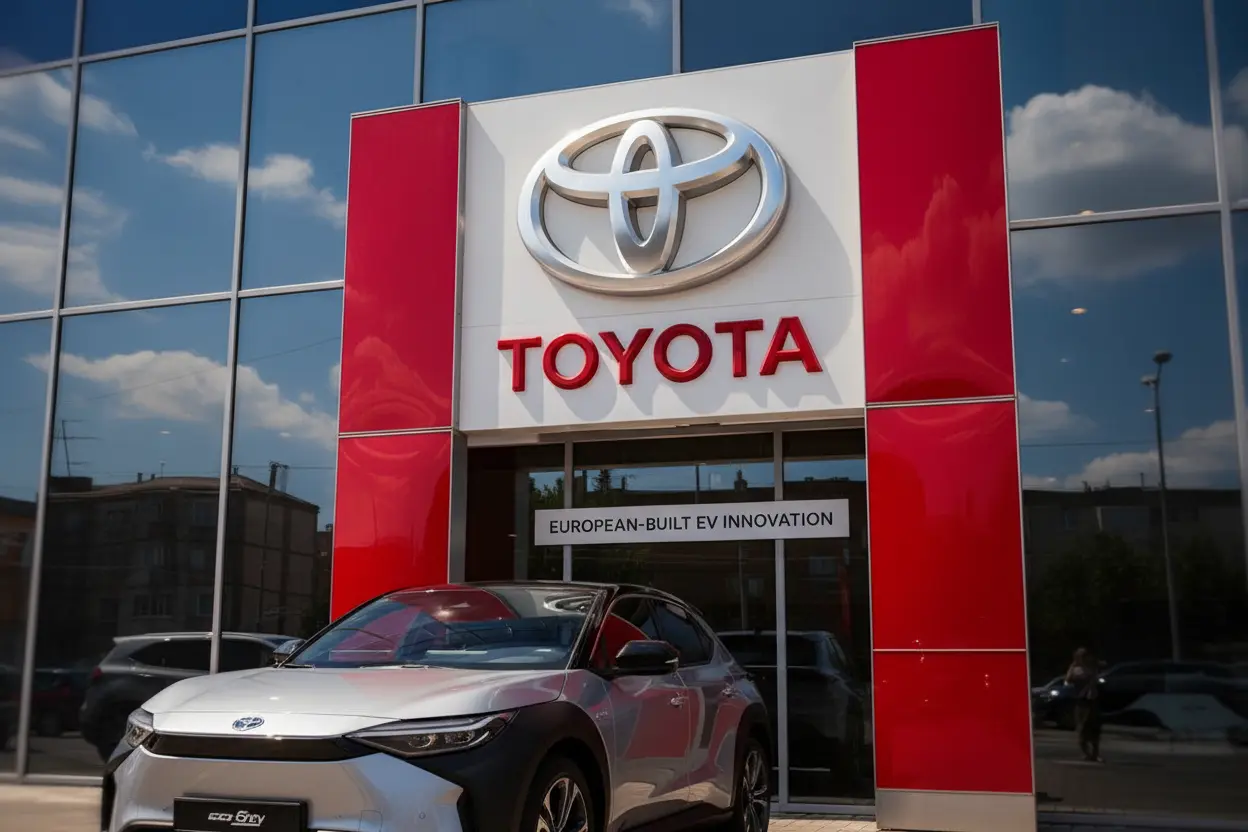
Toyota has just put its cards on the table—and it’s set to shake up the European electric vehicle scene in a way few expected. By 2028, the legendary carmaker will be rolling fully electric vehicles off European soil, marking a historic turning point not just for the brand, but for the EV landscape across the continent.
Kolín, Czech Republic: The Beating Heart of Toyota’s European EV
Toyota’s bold leap into European EV manufacturing will find its home in the Kolín plant in the Czech Republic. No small local initiative, this. According to Nikkei, the ambitious plan is to produce a whopping 100,000 electric vehicles per year at this facility. That’s right—a factory that once hummed with the production of small petrol cars is gearing up to become an electric powerhouse.
The Kolín plant itself isn’t a rookie in the car-making business. Born in 2002 as a joint venture with the PSA Group (Peugeot Citroën), it has been entirely in Toyota’s hands since 2021. It’s already producing hits like the Aygo X and Yaris. Soon, it’s set to welcome a new, fully electric sibling to its production line.
The First Player: Ready for the Electric SUV Era
Curious which vehicle gets to be the poster child for this European EV breakthrough? For car fans, the answer is music to your ears: Toyota’s first locally built electric for Europe will be a brand-new, all-electric SUV. This isn’t some left-field move—SUVs are still all the rage with customers, and Toyota clearly plans to make this model a cornerstone of its hefty EV offensive.
And what an offensive it is! By 2026, Toyota wants to offer no fewer than 14 fully electric models in its European showrooms. That includes eagerly awaited launches like the electric C-HR+ and a thoroughly refreshed bZ4X. The forthcoming electric SUV from the Czech Republic isn’t just another addition; it will be a linchpin for Toyota’s much larger, more varied European lineup.
Why Now? The Mighty Mix of Pressure and Ambition
You might be scratching your head—why is Toyota making this leap now, especially in Europe? The answer is as much about outside pressure as it is internal drive. Let’s break it down:
- EU Regulation: The European Union is on a mission, raising the bar with ever-stricter emission rules. The 2035 deadline to ban new petrol and diesel vehicles is sprinting into view. Toyota’s goal? Hit climate neutrality in Europe by 2040. That’s a steep climb, especially since less than 2% of their current sales are fully electric vehicles. So, going local isn’t just trendy: it’s absolutely vital.
- Corporate Realism: Inside Toyota, there’s growing acceptance that the future is electric—even if the journey is measured. The company recently delayed launching a large electric SUV in the US because demand wasn’t sparking as hoped. But for Europe, Toyota is sticking to its guns: local production will be the engine of their success.
Why Local Production Changes the Game
Ever wondered what the benefit is of building cars where you sell them? The perks are plentiful:
- Shorter and more efficient supply chains—less waiting, less shipping, fewer headaches.
- Lower transport costs, which can mean a smaller CO₂ footprint throughout the process (environmental halo, anyone?).
- Better control for Toyota to meet strict EU CO₂ targets and looming Euro 7 emission standards.
- Potential to pass savings on to you—the consumer. More affordable cars? Sign us up.
For customers, this also spells faster delivery times and vehicles tailored to Europe’s unique roads and regulations. It’s a win-win recipe, especially for those pondering their first electric Toyota.
Looking Ahead: Toyota Stepping Up to the Challenge
If you’re already a Toyota driver or simply considering going all-electric, things are about to get a lot more interesting. The next years will see Toyota’s European lineup transformed—more choice, potentially sharper pricing, and cars shaped specifically for the continent’s tastes and laws. With this decision, Toyota isn’t just dipping its toes into the EV pool. It’s diving in headfirst, ready to embrace the spirited competition on the European EV field. Buckle up—the electric journey is only just getting started.

John is a curious mind who loves to write about diverse topics. Passionate about sharing his thoughts and perspectives, he enjoys sparking conversations and encouraging discovery. For him, every subject is an invitation to discuss and learn.