
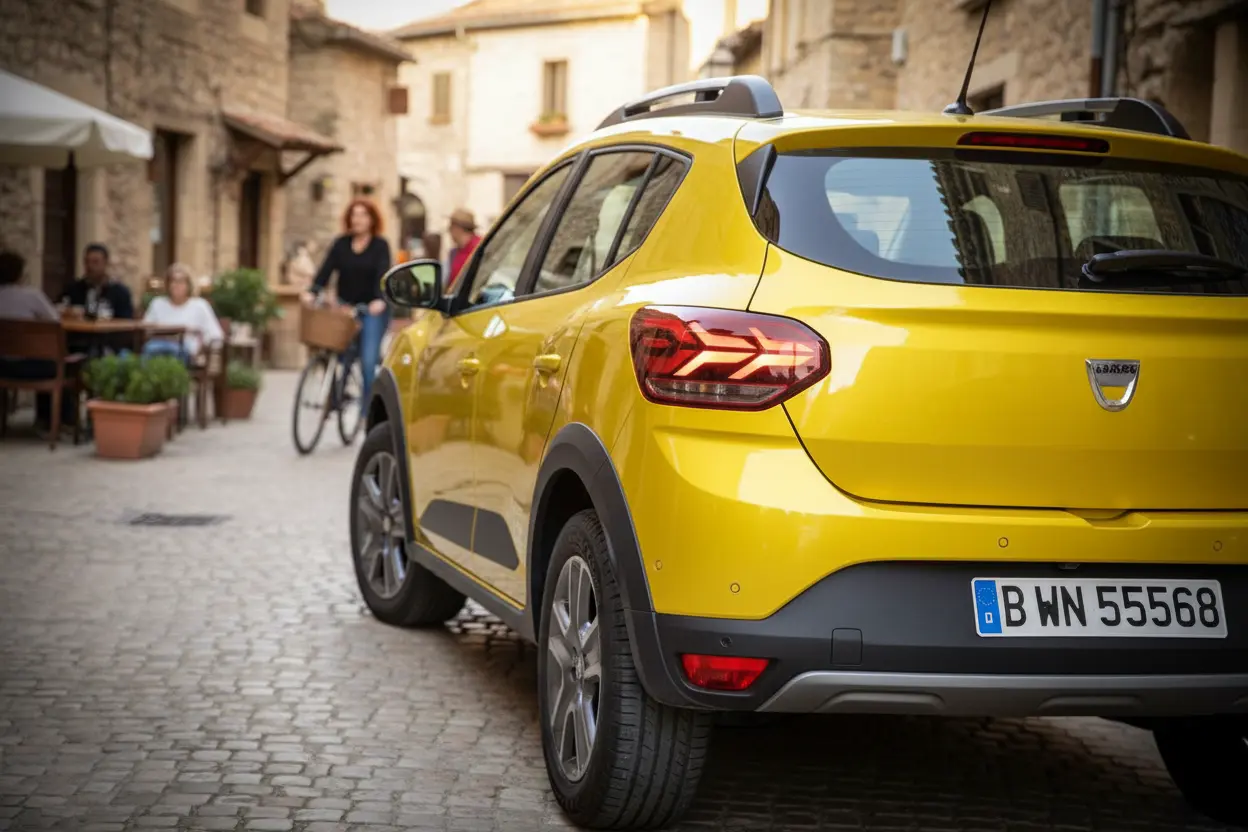
Think the slickest plug-in hybrid with its miraculous test numbers must be Europe’s go-to car? Think again. Simplicity – and a friendly price tag – are pulling ahead. Meet the real sales champion, and discover why those dreamy lab results might not take you as far (or as cheaply) as you imagine.
Why 2.7 l/100 km Isn’t the Magic Number You Think
You’ve probably seen those ultra-low consumption figures plastered all over plug-in hybrid (PHEV) ads: 2.7 l/100 km! That’s less “droplet sipper” and more “mirage in the desert.” What’s the catch? These numbers usually come from the WLTP certification test, a controlled scenario designed to compare different models. For PHEVs, the car starts the test with a full battery and racks up many kilometers purely on electricity. The result? That mouthwatering low combined consumption figure. But, as you may have suspected, the real world isn’t a test track.
In everyday use, unless you’re a champion charger—plugging in religiously—your fuel use looks much less angelic. Skip charging regularly or rack up mostly highway kilometers, and the promised magic number starts to evaporate quickly. Instant disappointment, unfortunately, is not covered under warranty.
Compare on Paper, Decide in Reality
Both automotive organizations and consumer watchdogs are raising a caution flag. The ANWB underscores that WLTP’s main aim is to let you compare different cars, not hand you a golden ticket to ultra-cheap commuting. Experiments and studies confirm: PHEVs use much more fuel in daily life than their brochure claims—unless you plug in every single time, like it’s your second job.
- If you do short hops and charge at home or work? Congratulations: you can really tame your fuel bill—if you’re disciplined.
- If your life is more 120 km/h highway than around-the-block errand? The rose-tinted 2.7 l/100 km quickly loses its shine.
So, that headline figure is a nice fantasy—achievable only in specific scenarios, not for everyone.
The Dacia Sandero: Cheap, Cheerful, and Europe’s Sales Champ
Forget the ‘2.7-litre hero.’ The real champion on Europe’s roads for the first half of 2025? The Dacia Sandero. This compact Romanian has beaten familiar names like the Renault Clio and even the Tesla Model Y. There’s no PHEV wizardry here—just straightforward engineering and a wallet-friendly price.
- Main engine choices: a no-nonsense 1.0-liter turbocharged petrol, or a factory LPG version (ECO-G).
- No plug-in hybrid powertrains. No misleading test miracles.
- What you do get: simplicity, predictable running costs, and a purchase price your bank account will thank you for.
That’s the recipe for Sandero’s success. Dacia neatly lines up what you can order: TCe petrol engines (manual or CVT automatic), LPG-friendly ECO-G, but absolutely no PHEV drivetrain. It’s a reminder: sometimes less truly is more.
What Really Matters When Choosing Your Next Car
It’s easy to get dazzled by a solitary standout number, but there’s more to the story:
- If your commute is short and you can plug in at home or the office, a PHEV can drop your petrol bills – if you’re religious with the charging cable.
- Mostly on the highway or just want simple, affordable motoring? A fuel-efficient petrol or LPG model (think: Sandero) could be a more honest answer than betting on a 2.7 l/100 km PHEV promise.
Let’s not forget the environmental angle. Recent data, including from the CBS, reveals that plug-in hybrids produce relatively high particulate emissions per kilometer compared to other drivetrains. So, being the ‘most sustainable choice’ may be less clear-cut than marketing folks suggest. Your charging habits and daily journeys play a bigger role than you might think.
The bottom line: 2.7 l/100 km is a glittering laboratory achievement, impressive with a full battery, but not a catch-all reality. Europe’s top-seller shows that simplicity, price, and reliability can be even more persuasive than headline figures. Make your decision based on your actual routes: will you always be plugging in, or does the predictable, budget-friendly (LPG-)petrol fit your real life? The most economical car is, after all, the one whose savings you actually realize—every single day.

John is a curious mind who loves to write about diverse topics. Passionate about sharing his thoughts and perspectives, he enjoys sparking conversations and encouraging discovery. For him, every subject is an invitation to discuss and learn.