
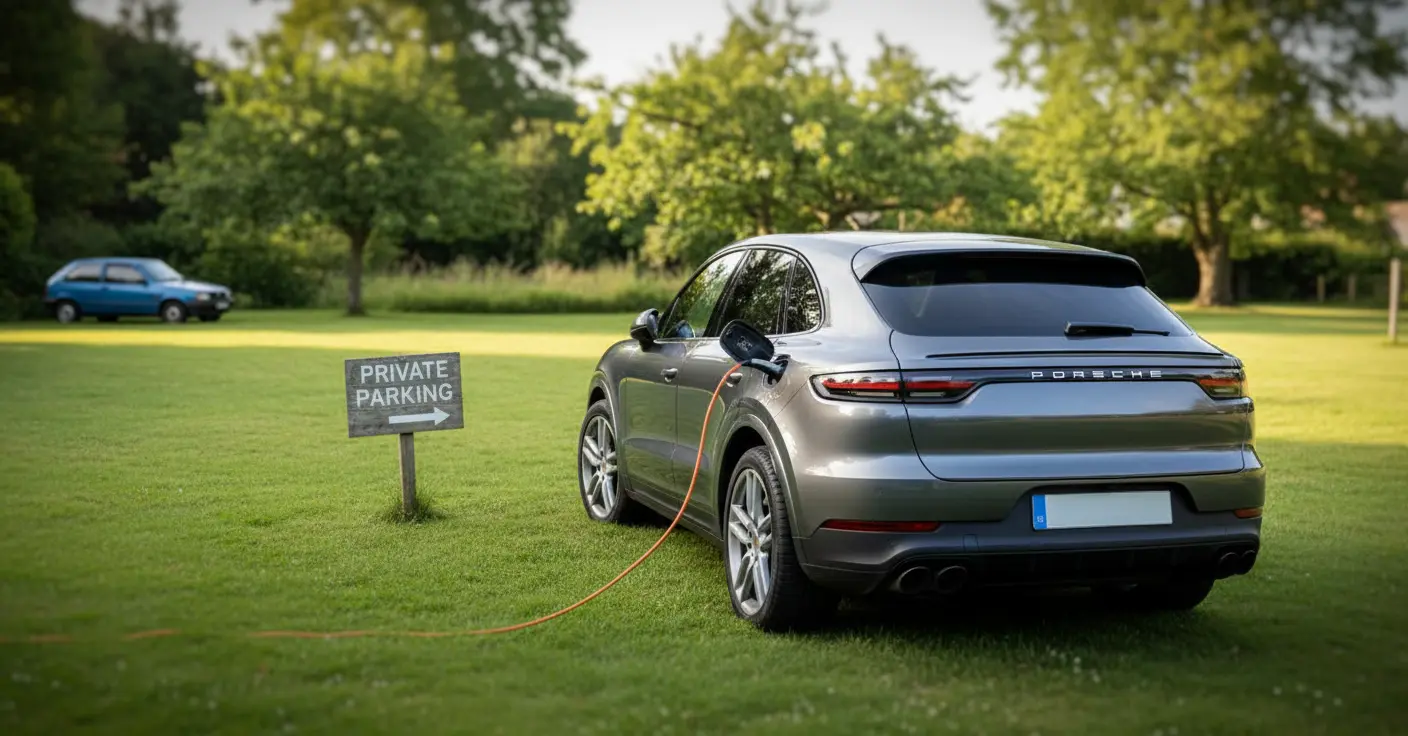
Picture this: you bravely park in your own garden after your neighbor blocks you in with his shiny Porsche. Sounds like the start of an epic urban saga, right? Well, when parking wars break out, things can go from mildly annoying to legally heated in no time. Let’s take a quick drive through real legal principles and streetwise reality, as defined by precise case law and a heap of firsthand parking angst.
When Parking Gets Personal: The Legal Framework
So, what happens when someone parks their car in a way that blocks your path, leaving you stuck and fuming? According to the Italian Supreme Court (Corte di Cassazione, sentence no. 8425 of 20 November 2013), parking your car in front of a building, blocking passage and denying access to another party, actually fits the crime of “private violence”. The crucial point: violence isn’t just about raised voices or broken mirrors—legally, it means any effective means used to forcibly deprive someone of their freedom of action or determination.
This definition is echoed in later decisions, like sentence no. 48346/15 from December 2015, and even earlier judgments. The courts have clarified that everything from parking across someone’s driveway, to blocking access to a private courtyard or gate, can constitute this crime. The idea is that such actions go beyond civil inconveniences; they can launch the unwitting driver into criminal territory, possibly subject to prosecution—especially when the act is deliberate and prevents someone from coming or going.
The Not-So-Obvious Details: Signs, Common Sense, and Who’s Really at Fault
The presence—or absence—of an official driveway sign (the fabled “passo carrabile”) makes all the difference. Only the presence of that sign determines if parking is allowed in front of a certain area. Don’t count on telepathy: if extra meters of restricted space are needed beyond what the sign specifies, there must be clear signage. People can’t be expected to guess where you want extra room to maneuver.
- If a passage is temporarily blocked for, say, roadwork, there must be a public ordinance and advance notice.
- If someone parks badly, like leaving their wheels on the curb, and you block them in on purpose (even if your car is correctly parked), you could be considered fully aware—and thus guilty—of restricting their freedom of movement.
However, the situation can be more nuanced. If a neighbor parks in front of a pedestrian gate, making your maneuvers more difficult but not entirely blocking your entry or exit, many would argue there is no violation. As long as you can enter and exit (even if it takes a few extra turns worthy of a driving school exam), you aren’t completely deprived of your freedom. The law doesn’t require your neighbor to account for every possible maneuver, nor to cater for SUVs that weren’t imagined fifty years ago.
“Houdini” Test: How Blocked Is Too Blocked?
Of course, there comes a limit—no one is required to be a magician behind the wheel. If the hindrance becomes so serious that leaving your own property becomes impossible without moving obstacles or knocking down walls, the judge might indeed see it as crossing into “private violence.” But if you’re still getting in and out (even with creative steering), the threshold isn’t crossed. Parking disputes, then, live and die on the degree of actual blockage, not just inconvenience.
- Practical tip: If you park and stay in your car, ready to move when someone needs to pass, you’re not going to be accused of anything. It’s the actual prevention of movement—conscious and persistent—that’s the issue.
- If the blocker can, in good faith, say they didn’t realize they blocked a big vehicle, the first mistake might be overlooked. But as soon as awareness dawns, repeated mistakes probably won’t fly anymore (and, as someone quipped, the Hummer might just roll over your defense).
Takeaways from the Frontline: Your Rights (and Limits)
Just because you’re annoyed doesn’t mean you’re legally blocked: if you can come and go, even if you have to channel your inner parking champion, the courts see things differently. Only when passage is unreasonably and knowingly hindered—or outright barricaded—do criminal consequences arise. The moral? Know your rights, check the signs, and keep your maneuvers within reason. And if your neighbor’s Porsche is ever in your way, remember: epic revenge is sweet, but so is having the law on your side.

John is a curious mind who loves to write about diverse topics. Passionate about sharing his thoughts and perspectives, he enjoys sparking conversations and encouraging discovery. For him, every subject is an invitation to discuss and learn.