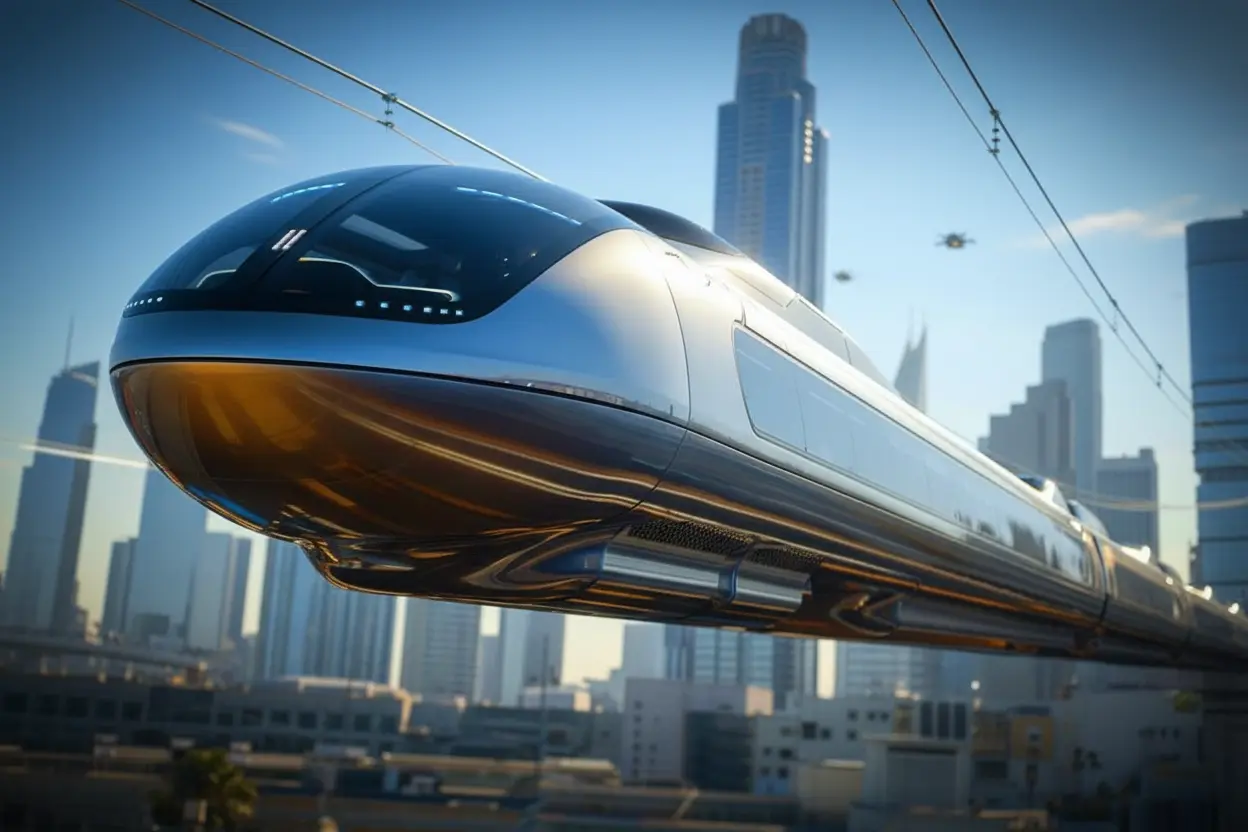
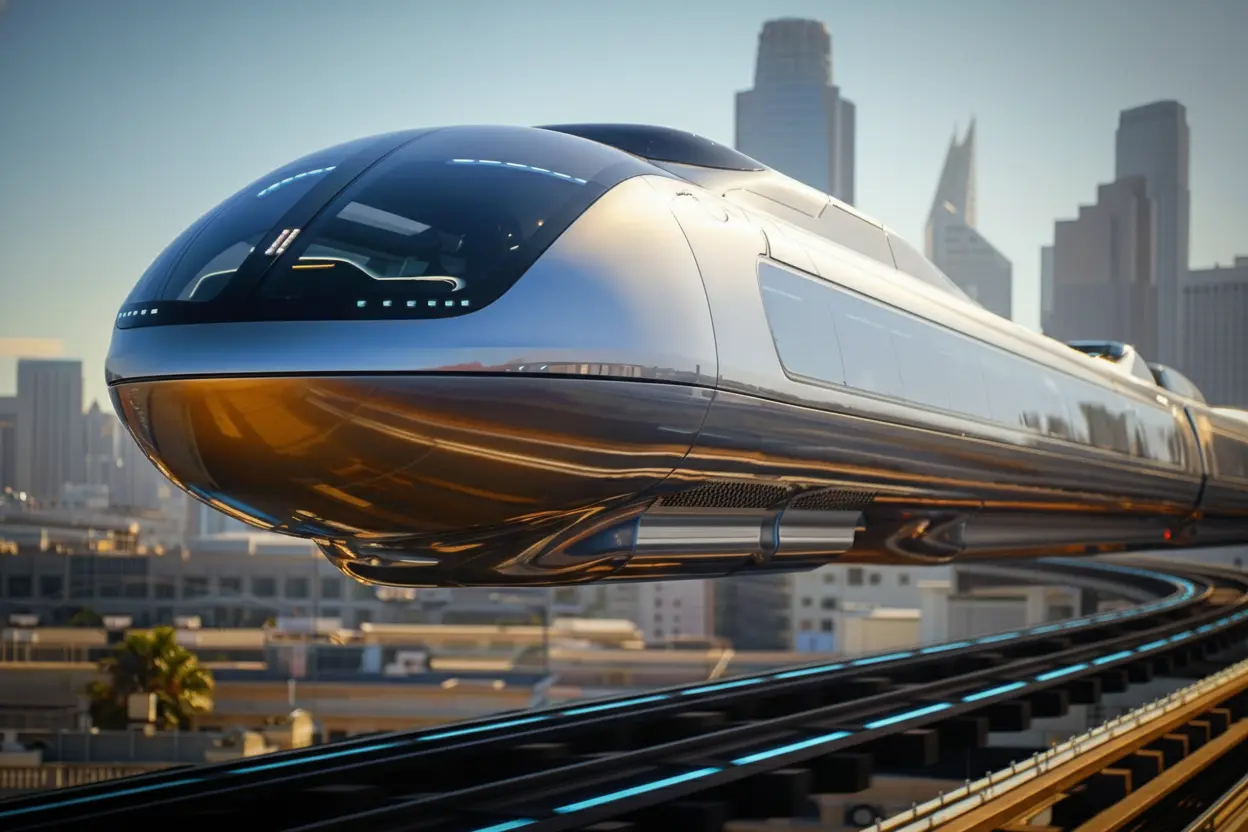
Picture this: a train that doesn’t just travel, it “flies” inside a sealed, low-pressure tube. No, this isn’t a scene from the latest science fiction blockbuster—this is happening right now, in China. The first large-scale test of the country’s supersonic Hyperloop has set tongues wagging, sending a shockwave through the world of transport and even making the aviation industry sweat a little.
From Imagination to Innovation: Datong’s Great Leap
In the city of Datong, Shanxi province, Chinese engineers have pulled off what would have seemed unthinkable until just a few years ago. On a 2-kilometer test track, a prototype Hyperloop equipped with magnetic levitation has shown off its ability to “float” above the rails. This marvel is thanks to a set of magnetic suspension systems paired with an atmosphere of low air pressure inside the tube. Is it magic? Not quite—but it’s certainly the kind of breakthrough that makes the future feel suspiciously close.
No official figures have been shared yet (the suspense is real), but whispers already suggest that the Hyperloop is flirting with speeds near 1,000 km/h. That blurs the line between train and airplane. For a bit of perspective, China’s current record-holding maglev trains max out around 600 km/h, according to the Ministry of Transport. So, yes: this Hyperloop is threatening to leave even those speed demons in the dust.
The Powerhouse Partnership Propelling Progress
This ambitious program is the product of a partnership between the provincial government of Shanxi and the China Aerospace Science and Industry Corporation (CASIC). And they’re not wasting any time—construction of the Hyperloop’s test center was completed at lightning speed, signaling the project’s gravity and strategic importance for the nation.
Here’s the ambitious vision: revolutionize travel between China’s sprawling megacities. Imagine this—Beijing to Shanghai in 90 minutes. Currently, that’s an eight-hour trip by high-speed train, or five hours by plane (not counting time spent in airport lines or complaining about lost luggage). If the Hyperloop lives up to this promise, it could transform not just mobility, but the economic and social structure of the country in ways nobody could ignore.
The Human Perspective: Time is Life
Anyone who’s ever zipped along China’s high-speed rail knows just how life-changing a few hours shaved off a trip can be. Now, with the Hyperloop’s supersonic potential, the gain could be even more jaw-dropping.
But before you start packing your travel pillow for a 90-minute Beijing-Shanghai jaunt, a reality check: doubts linger about scalability. Building sealed tubes and dedicated stations sounds fantastic—until someone starts crunching the price tag. The costs, potentially enormous, could be the real speed bump on the road to Hyperloop ubiquity.
- Drastic reduction in travel time could reshape daily routines.
- The leap from maglev to Hyperloop closes the gap between trains and planes.
- Infrastructure costs remain a major unanswered question.
So, Is This the End of Airplanes?
The dream of a train that can go toe-to-toe with airplanes on continental routes has never felt this close to reality. With this latest demonstration, China has shown a clear ambition to lead the race toward the transport of tomorrow.
But before airlines start listing their jets on second-hand marketplaces, the big question remains: can China’s supersonic Hyperloop overcome the technical and economic hurdles standing between this vision and the daily reality of travelers?
The future may not have arrived yet—but if the blurred lines between science fiction and science fact are anything to go by, it’s hurtling down the track at nearly 1,000 km/h. Buckle up, and keep an eye on the tube.

John is a curious mind who loves to write about diverse topics. Passionate about sharing his thoughts and perspectives, he enjoys sparking conversations and encouraging discovery. For him, every subject is an invitation to discuss and learn.