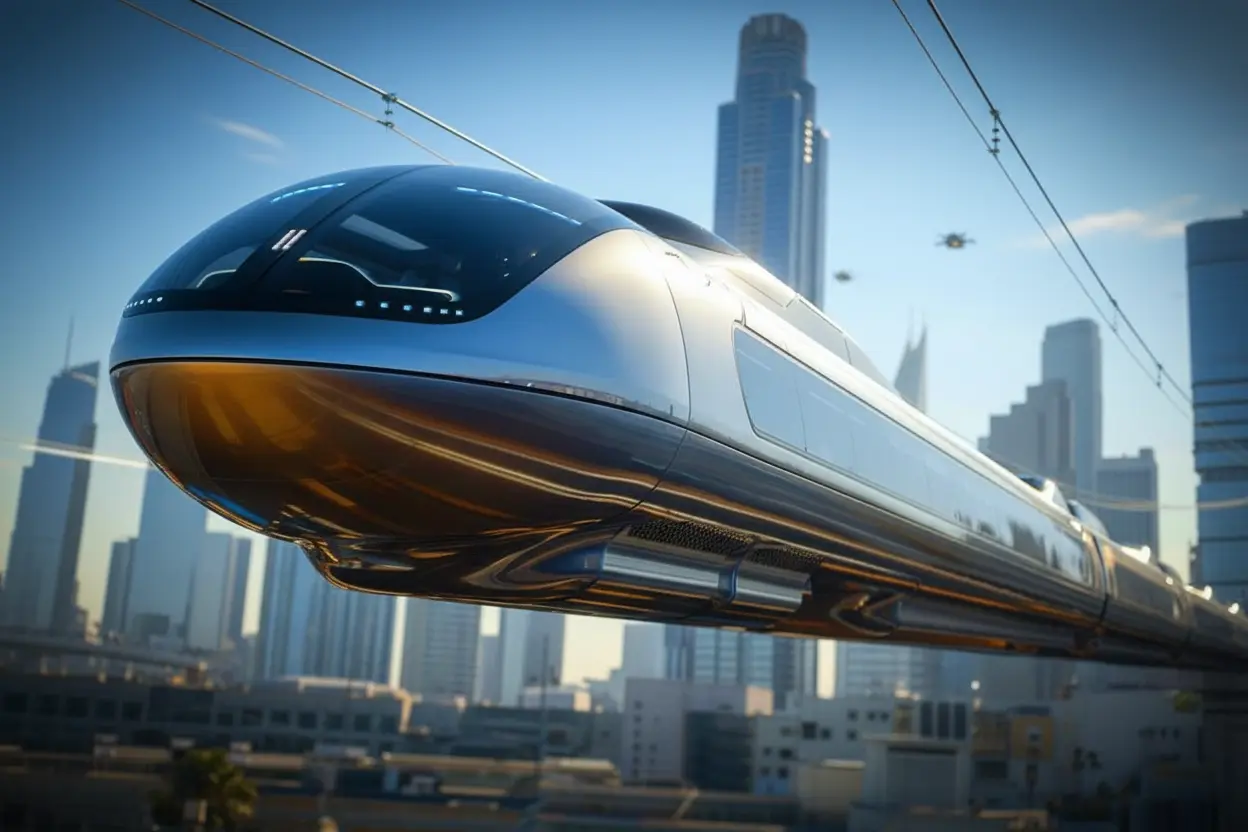
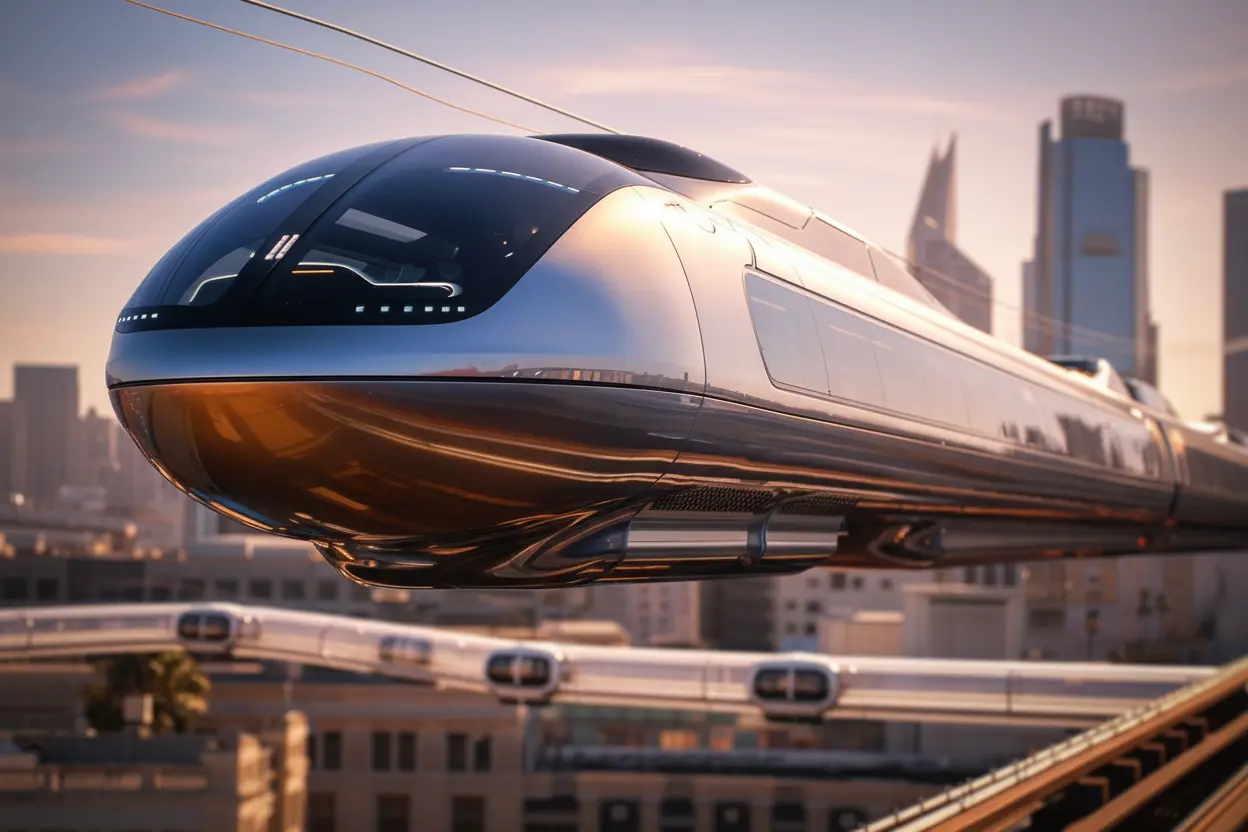
Imagine boarding a train in China, settling into your seat, and then silently gliding away—not on steel rails, but suspended within a low-pressure tube, headed for airplane speeds. The future of travel just got a supersonic update, and it has nothing to do with the clouds.
Supersonic Dreams Come Alive in Datong
If you’ve ever zipped across China on a high-speed train—those engineering marvels notorious for hitting 350 km/h with the punctuality of a Swiss watch—you know the routine thrill. Now, take that sensation and multiply it. In Datong, engineers have tested China’s first supersonic Hyperloop prototype. Instead of riding rails, this innovative vehicle levitates, using both magnetic suspensions and a low-pressure environment. No, it’s not science fiction—it’s the new experimental reality.
The test took place on a 2-kilometer experimental track. Thanks to the mix of magnetic levitation and low air pressure, the convoy hovers over its pathway, barely touching anything. The official speed data? That’s still classified. However, whispers from the test site have already suggested that the prototype was flirting with the 1,000 km/h mark—more than twice as fast as any current maglev train. Attendees described the experience as a “silent takeoff,” evoking the quiet thrill of a passenger jet leaving the ground.
A Partnership Fueled by Ambition
This breakthrough isn’t the work of a lone inventor tinkering in a backyard shed. It’s the product of a collaboration between Shanxi province and the China Aerospace Science and Industry Corporation (CASIC). Building the test track was completed in record time, underscoring the ambition driving the project.
What’s the endgame? Dramatically slashing travel times between China’s major cities. For instance, hopping from Beijing to Shanghai could one day be accomplished in just 90 minutes. To put that into perspective, it currently takes almost eight hours by train or five hours by plane. In a country where hundreds of millions of passengers move about annually, that’s not just convenience—that’s a travel revolution.
Promise on the Horizon, but Real-World Hurdles Remain
Anyone who has experienced Chinese high-speed rail knows how quickly daily habits evolve when you can cross vast regions in a matter of hours. Cut those times even more, and commuting and logistics get upended. Yet, the Hyperloop dream comes with a hefty dose of reality.
- The infrastructure requires sealed tubes and dedicated stations—a logistical and financial headache.
- Preliminary estimates tip the initial investment at over 15 billion euros. That’s a price tag no one can ignore, demanding heavy support from both public and private investors.
- There are operational and safety puzzles to solve: integrating these tubes with existing railway systems, ensuring maintenance efficiency, and—most crucially—figuring out how to safely evacuate passengers from a pressurized tunnel in an emergency.
- Let’s not forget the environmental considerations, since endless kilometers of infrastructure don’t just appear without leaving a mark.
Chinese authorities remain optimistic, betting that economies of scale and technological advances will eventually bring costs under control. If achieved, China could establish a model attractive to the rest of the world.
Not Science Fiction—Just Not Quite Boarding Yet
A train worthy of competing with planes across continents is no longer a sci-fi fantasy. The Chinese supersonic Hyperloop has nudged the concept close to reality. The ultimate challenge now? Proving this technological leap can break out of the laboratory and take root in the real world—without producing financial headaches that would leave even the boldest investor reaching for the aspirin.
At this point, the promise remains compelling: traveling by train at the cruising speed of a commercial jet. Will you soon be booking a train instead of a flight for your cross-country trek? For now, the revolution is still brewing. But if these ambitions are realized, train stations could soon be the new departure gates for a supersonic future.

John is a curious mind who loves to write about diverse topics. Passionate about sharing his thoughts and perspectives, he enjoys sparking conversations and encouraging discovery. For him, every subject is an invitation to discuss and learn.