
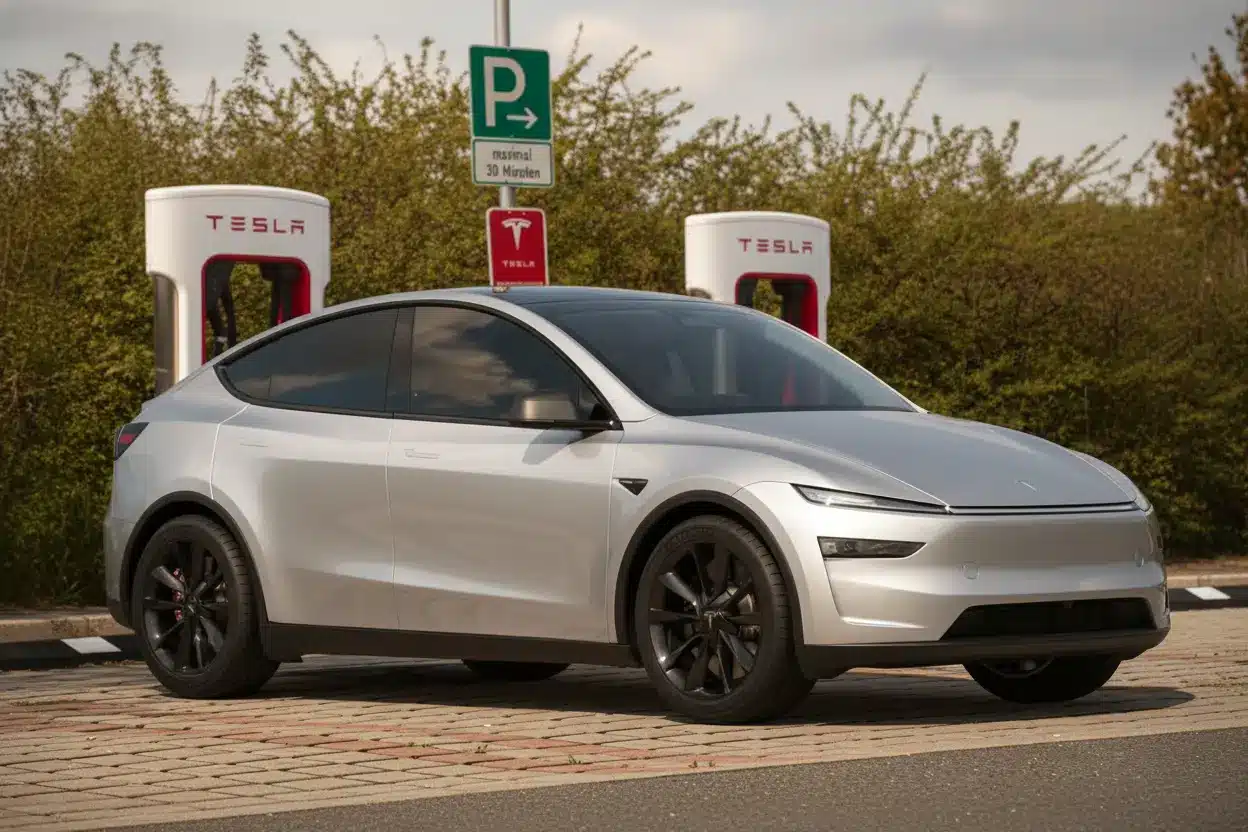
Bought a Tesla Model Y two years ago and thinking, “It’s just a car, right?” Think again. Behind that silent drive and futuristic dashboard hides a storm of market swings, ethical debates, and more social controversy than a family WhatsApp group at Christmas.
The Unstoppable Rise—And Fall—And Rise Again—of the Model Y
For a while, Tesla was the popular kid nobody wanted to hang out with in Europe. Month after month, sales hit double-digit lows, enough to make you wonder if Tesla’s glory days were over. But then—plot twist! Last month, the Model Y sprang back as the best-selling car in the Netherlands. Not just in the lowlands, either: the numbers for almost all of Europe are in, and guess what? September’s top-selling car was, drum roll… the Tesla Model Y. The last time it wore that crown was nine months ago.
To claim the throne, the Model Y leapfrogged over the Renault Clio and the Dacia Sandero, once kings of the European charts (except for that one rogue August when the Volkswagen T-Roc grabbed gold). Sure, it’s an impressive feat that the Model Y outsold everything in its path. Still, let’s keep our party hats in check: being number one doesn’t mean business as usual in Teslaland. Even with its top spot, the Model Y’s European sales actually dropped 8.6% compared to last year. And the Dutch stats? Outright bizarre. The Model Y was the best-seller but still sold 44.4% fewer units than the previous year. Someone call the economist!
Enter the Model Y Standard: The Price is Right (But At What Cost?)
So, what’s next? A sales boost might be waiting in the wings, thanks to the new Model Y Standard. Deliveries start next month, and at €39,990, it’s €11,000 cheaper than the Model Y ‘Premium’. Even those embarrassed by their shiny electric badge (“Tesla-shame,” anyone?) might just swallow their pride for that kind of deal. After all, who can resist value for money—especially when that value feels so… electrifying?
The Buying Dilemma: Is It Just About the Car?
But let’s steer off the numbers and into the heated debate that sizzles below every Tesla purchase: What exactly are you buying, and who are you supporting? Some say it’s “astonishing” how indifferent folks can be to “sponsoring a fascist,” referring to Tesla’s controversial leader. Car buyers? For at least half of them, a car is nothing more than a tool—anonymous, like a fork in a kitchen drawer.
Tesla built its loyal fanbase early. People get used to the system, the product, the price-to-quality ratio, regardless of the face on the company poster. That resonates for many: some buy with their wallet, not their ideals. Bang for your buck, as the saying goes.
Yet, politics swirls on. Some critique how certain figures, like Musk, chase power at the (alleged) expense of democratic ideals, actively promoting radical parties or trying to control information streams (cue Twitter/X, xAi, and their alleged media warfare). Others aren’t buying the moral outrage. “Most buyers make a practical decision based on features, price, and functionality.” Are you condemning them all?
Where’s the Line: Ethics vs. Practicality
This is where things get spicy. If someone buys on features and ignores sketchy CEO behavior, is that willful indifference? And where do you draw the line? No electronics, because some company somewhere is propping up a regime? No petroleum, because oil states have dirty hands? How far back in history do we go? No German cars because of WWII ties?
Debate ricochets in all directions:
- Is it right to call every buyer an indifferent enabler of a problematic leader?
- Can you really escape moral compromise with any big purchase?
- Is it valid context, or just whataboutism, to remind people of past and present business complicity?
Before you know it, you’re deep in arguments about WWII, radical politics, and the meaning of ‘democracy’. Some accuse Musk of actively undermining democratic principles, pushing radical parties, and controlling narratives. Others retort that such claims are either unsubstantiated or missing the nuance between actual fascist regimes and capitalist disruptors with strong opinions and loud social media accounts.
It gets personal, too: “I’m on my second Tesla, because for the money, there’s nothing better.” Others say, “If Musk gets even more right-wing, I’ll buy another!” Some wave the value-for-money flag, while others dream of alternatives—Renault, Polestar, BMW—if only they understood the same magic recipe.
Conclusion: Is Regret Warranted, or Just Human?
Owning a Tesla Model Y two years down the line is rarely about smooth acceleration or red paint you have to pay extra for (though, that shade is, frankly, insane). It’s a rollercoaster tangled in value, identity, history, and the not-so-tiny matter of the man at the top.
So, should you regret your Model Y? Maybe if you crave simplicity in a world that refuses to be simple. Or maybe, like the masses, you just want good value and a car that works—and prefer not to engage in a moral debate every time you turn the key (or, well, press the button). If it’s guilt you’re after, there’s no shortage of alternatives—or opinions. But if it’s value, functionality, and that uniquely Tesla experience you want, you’re in complicated, if popular, company.
Choose your gear—and your battles—wisely.

John is a curious mind who loves to write about diverse topics. Passionate about sharing his thoughts and perspectives, he enjoys sparking conversations and encouraging discovery. For him, every subject is an invitation to discuss and learn.