Who knew a few wild mushrooms could turn a charming Alpine village into the center of a decade-long medical mystery? Sometimes, what’s on your plate is more than a conversation starter—sometimes, it’s the entire plot.
The Enigma of Montchavin: A Village in the Shadow of ALS
Nestled near the ski resort of La Plagne in the French region of Savoie, the village of Montchavin exudes rustic charm. But in 2009, a local general practitioner stumbled upon a disturbing trend: she had diagnosed her third case of a rare, fatal neurodegenerative disease known as amyotrophic lateral sclerosis (ALS), also called Charcot’s disease, among the villagers. In a place where news travels faster than Wi-Fi, this was enough to trigger alarm bells.
Soon, specialists in the field were contacted. An extensive investigation kicked off, revealing that from 1991 to 2013, twelve cases of ALS had occurred in the village, with half of the affected individuals already deceased by the time the research began. Even more striking, these individuals—aged between 39 and 75—shared no family ties, though, as is often the case in small communities, they all knew each other. This cluster begged a question: why here and why now?
When Water, Air, and Soil Don’t Blame, Look at the Dinner Plate
Faced with this medical puzzle, experts quickly honed in on environmental causes. They scoured potential culprits: traces of bacterial toxins, lead in the water supply, hazardous levels of radon gas in homes. They even checked for air or soil pollution from pesticides or heavy metals. Nothing, nada, zip. It was as if Montchavin itself was trying to keep its secrets spicy.
Just as the research seemed to have reached a dead end, the case caught the attention of Peter Spencer, a toxicologist from the University of Oregon. Spencer had studied a similar phenomenon on the Pacific island of Guam, where consumption of certain local plants, specifically the seeds of the Japanese cycad (known in the Antilles as « petit rameau »), was linked to outbreaks of ALS. But in Savoie, the cycad wasn’t on the menu. Instead, eyes turned to a far more familiar ingredient.
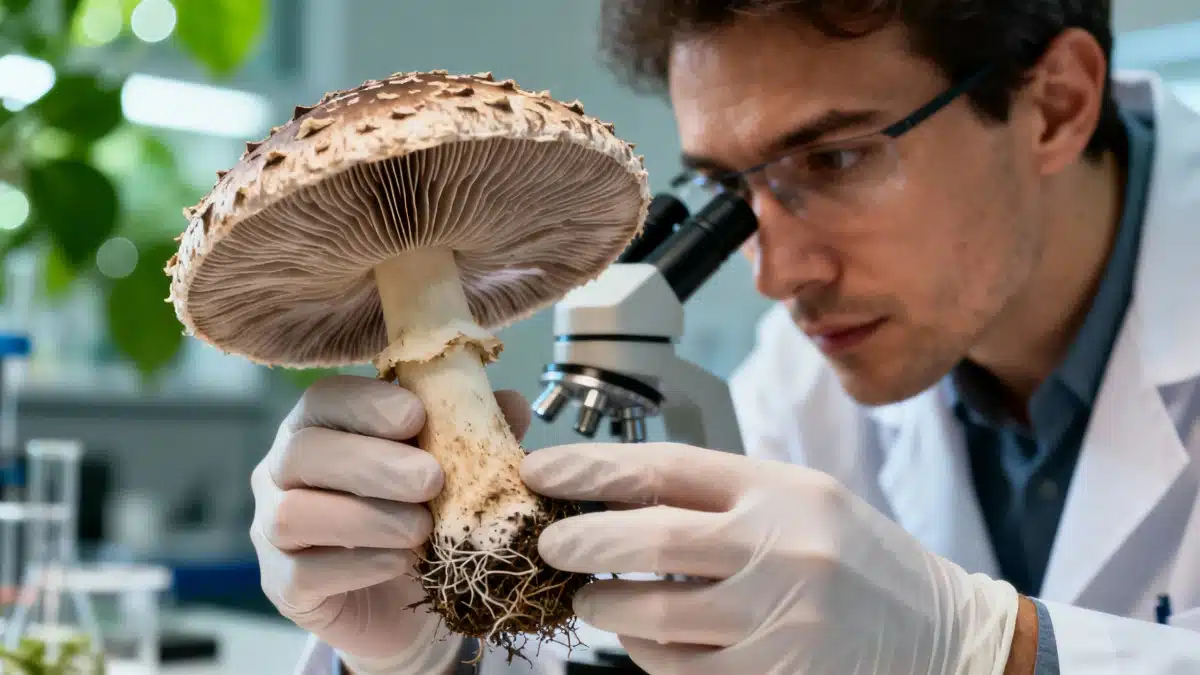
Spencer suspected a homegrown danger: the false morel, known scientifically as Gyromitra gigas. This mushroom, commonly found and sometimes mistaken for the edible true morel, had toxins comparable to those present in the infamous cycad seeds—similar villain, different costume.
False Morels: The Uninvited Guest at the Table
In a study published by the Journal of Neurological Sciences, researchers revealed a compelling link. All 14 identified patients had consumed false morels repeatedly, sometimes alongside genuine morels, years before the onset of their illness. Other villagers, by contrast, had not touched the fungus. Some of the affected even remembered unpleasant symptoms following hearty meals that featured the notorious mushroom. For as long as anyone could recall, wild plants and mushrooms were a part of the local cuisine, but not all had tasted quite as wild as the false morels—a species banned from sale in France since 1991 due to its potential toxicity. So why were they still finding their way to the table?
They weren’t alone in this culinary misadventure. In Finland, an uptick in ALS cases was noted in a region where false morels are considered a delicacy—while in Guam, cases plummeted once cycad seeds disappeared from the local diet. The message for Montchavin was clear: sometimes tradition needs a firm rewrite.
- ALS cluster: 14 patients, all consumers of false morel mushrooms
- No familial or genetic link—just a shared taste for the local fungus
- Other potential causes (water, air, soil contamination) ruled out
- Cases echoed similar incidents in Finland and Guam
Chefs, Take Note: What’s in Your Basket?
This investigation, stretching over a decade like a particularly stubborn wheel of Alpine cheese, now brings a sobering lesson. Eating wild can be exhilarating, but when a banned mushroom brings not flavor, but harm, it’s time to rethink the menu. The story of Montchavin shows how a love of local fare and a bit of culinary adventurism can sometimes lead to unexpected, and in this case tragic, consequences.
The practical advice? Next time you’re foraging in the Alps—or anywhere—be sure you know exactly what’s going into your skillet. Temptation looks a lot like a false morel, but safety never goes out of style at the dinner table. If you’re hosting friends, maybe stick to store-bought mushrooms, just this once.

John is a curious mind who loves to write about diverse topics. Passionate about sharing his thoughts and perspectives, he enjoys sparking conversations and encouraging discovery. For him, every subject is an invitation to discuss and learn.