
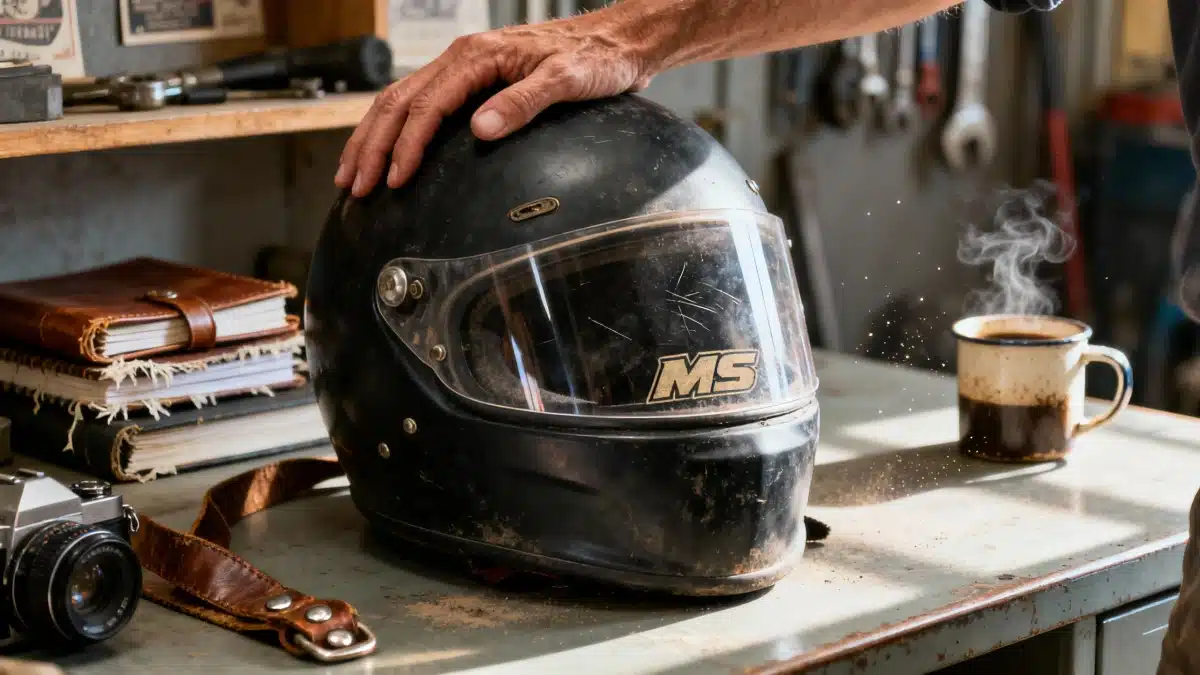
The world of Formula 1 pauses to salute a departed icon: not just a driver of rare talent, but a mentor whose German precision and steadfast principles have shaped generations. Behind every championship and every trophy stand the shadows of a legend whose greatest gift was not speed alone, but the art of passing the baton – a mentor to Michael Schumacher whose influence, quietly stitched into the fabric of the paddock, stretches far beyond the checkered flag.
An Enduring Legacy: More Than a Record Book
By the close of the 1980s, it was impossible to walk a pit lane without hearing his name exchanged in hushed admiration. Teams searching for the next big thing would often glance his way – and Mercedes, hungry to prepare for endurance glory, handpicked him for his pragmatic methodology and leadership. He made his mark out of the spotlight, quietly introducing rigor, clear guidance, and an accessible set of touchstones adopted by everyone on the team. These values weren’t just for show: they were lived, day in and day out, forming the backbone of future victories.
The Signature Methods That Shaped Champions
Sitting alongside a daring young driver in the cockpit of the Sauber-Mercedes C11, he hammered home a driving philosophy that became almost a mantra. The legendary triptych: patience before attack, controlled deceleration, and precision entering every curve. Over time, these fundamentals formed the automatic habits that allowed drivers to remain cool-headed under pressure, transforming potential into performance one lap at a time.
- Patience before the attack
- Mastery of deceleration
- Precision when entering corners
This approach was as much about the mind as the machine. For the prodigies who would follow, like Michael Schumacher, he remained the definition of a discreet yet decisive mentor. His pedagogy seamlessly wove together nuanced technical setups and mental preparation. For engineers, he was a steady reference point: keep performance constant even as the track evolves, nerves fray, and stakes climb.
From Humble Beginnings to Endurance Hero
Born in Bavaria, he began his racing journey behind the wheel of Alfa Romeos loaned by a generous dealer. His first impressive results paved his way to national competitions. He racked up start after start, learned to master tracks of every style, and toughened up in German pack racing, where survival often meant coping with unpredictable weather and budgetary reality checks.
The 24 Hours of Le Mans beckoned in 1972, followed two years later by his official Formula 1 debut with Surtees, then McLaren. His career was defined by dependable regularity, always prioritizing fine-tuning and mechanical integrity—his lessons from endurance racing transferred seamlessly to the sprint demands of Grand Prix racing. The highlight came in 1975 with victory at the Spanish Grand Prix, a triumph darkened by a tragic accident. Between 1973 and 1982, he launched from 114 Grand Prix grids, earning 71 points. A record of steady achievement, this was the matrix from which his future mentorship would be crafted.
Tributes, Memory, and a Living Compass
His passing in May at 78, following complications from a February stroke, has sparked a wave of tributes. Across circuits, the focus is not on trophies but on the man of method. Nürburgring and the 24 Hours of Le Mans are repeatedly called out as symbolic venues to honor him. To make memory tangible, the McLaren M23—his former racing chariot—returned to the Mugello track on October 12, 2024. The gesture, unpretentious and deeply material, underscores his profound bond with the machinery and the long arc of motorsport history.
Behind the scenes, his approach continues to inspire in driver schools. His legacy shows that excellence is rooted in transferable standards: work routines, control, humility. Witnesses and mechanics recall his practical, down-to-earth advice, always dispensed without fanfare. That’s why his phraseology remains linked to a way of gaining time — by sometimes learning to lose it.
- Work routines and control
- Humility above bravado
- Patience and precision before all-out risk
His journey stands as a master class in consistency, attentive listening, and precision – virtues that, in the unpredictable theatre of racing, deliver victories far more reliably than bravado ever could. By passing along his routines and clear reference points, drivers and teams share a common compass for stressful times on track.
So here’s the lasting message: let his high standards keep inspiring all those who, in motorsport or beyond, seek quiet progress over noisy ego—whatever the circuit, whatever the weather. The real pace, after all, often starts when you learn how and where to slow down.

John is a curious mind who loves to write about diverse topics. Passionate about sharing his thoughts and perspectives, he enjoys sparking conversations and encouraging discovery. For him, every subject is an invitation to discuss and learn.